Dates
August 22, 2026 → August 23, 2026
Route
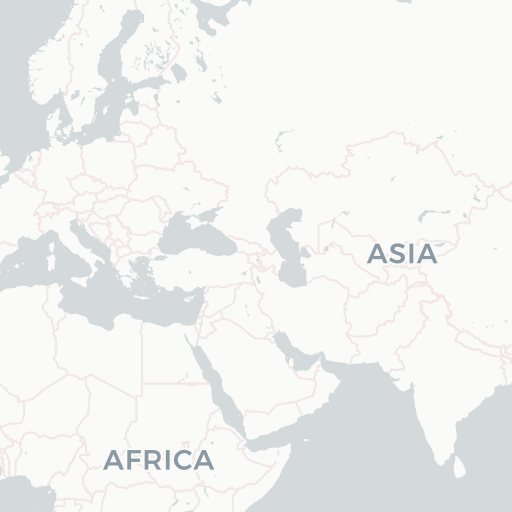
Sassnitz
View table of contents
Germany joins the game: SailGP lands in Sassnitz
Thirteen F50s, the Baltic Sea, the chalk cliffs of Rügen as a backdrop. On August 22 and 23, 2026, SailGP will plant its foils in German waters for the first time. A historic debut that transforms the small port town of Sassnitz into the global epicenter of foiling.
Since launching in 2018, the circuit has continuously pushed its boundaries—Saint-Tropez, Cádiz, Taranto. The arrival in Germany answers a growing appetite among German-speaking audiences for top-level sailing. And the choice of Rügen Island is no accident: ideal wind conditions to send the F50 catamarans flirting with 100 km/h.
A race stadium built for the show
The Sassnitz course exploits a concept now proven by SailGP: the coastal race stadium. Races unfold close to shore, giving spectators a direct view of maneuvers, knife-edge starts, and full-speed gybes.
But Rügen is no ordinary sailing venue. Its famous chalk cliffs are likely to create site effects—wind corridors, pressure zones—forcing strategists to rethink their usual patterns. On machines as sensitive as the F50s, the slightest miscalculation comes at a steep price.
F50s face the Baltic
The circuit's flying catamarans remain extraordinary machines:
- Length: 15 meters
- Rigid wing: adjustable from 18 to 24 meters depending on conditions
- Carbon-titanium foils allowing the boat to take off and reach 54 knots
Piloting these rockets in the sometimes capricious Baltic waters will demand millimeter-perfect synchronization between the helmsman, flight controller, and wing trimmer. A trio whose slightest hesitation can transform majestic flight into spectacular capsize.
Race format: two days, six races, zero room for error
SailGP has made simplicity and intensity its trademark. The Sassnitz weekend breaks down into two key phases.
Five Fleet Races: All 13 teams compete simultaneously. Each position earns points—10 for first, then decreasing to 1 point for tenth. The bottom three leave empty-handed.
The Final: The top three teams from the event's overall standings face off in a decisive final race. The winner pockets 10 championship points, second gets 9, third 8. The remaining ten teams receive points based on their fleet standings.
This scoring system makes every race decisive. The season goal remains the same for everyone: finish in the top 3 of the overall championship to reach the Grand Final, where the champion's title and the $2 million check are decided in a single race.
Thirteen teams, thirteen stories
Season 6 fields an expanded roster of 13 nations, with major transfers and new dynamics.
The declared favorites
- Tom Slingsby (Australia) — The circuit's most decorated helmsman. Aggressive at the start, surgical in flight. The "Flying Roos" bring in Iain Jensen on the wing but maintain their champion DNA.
- Peter Burling (New Zealand) — The "Black Foils" bank on total stability in their sailing lineup. No changes, rock-solid cohesion. The weapon of calm against chaos.
- Quentin Delapierre (France) — The French team makes a major move by recruiting Briton Leigh McMillan as wing trimmer. An experienced profile aimed at the podium.
The home team under pressure
Erik Kosegarten-Heil will carry the German flag before his home crowd. The arrival of Kevin Peponnet as wing trimmer strengthens the crew, but the pressure of a home debut can be as galvanizing as it is paralyzing.

Dark horses to watch
- Red Bull Italy takes a radical turn with the arrival of New Zealander Phil Robertson as helmsman—a competitor known for his aggressive style.
- Artemis (Sweden), new to the calendar, fields Nathan Outteridge at the helm and Andy Maloney in the crew. Heavy hitters.
- Denmark makes a media splash by integrating Olympic medalist Anne-Marie Rindom as strategist within Rockwool Racing's Nicolai Sehested.
The full lineup
- United States — Taylor Canfield, with Hans Henken on flight control
- Spain — Diego Botin, unchanged and performing roster
- Emirates GBR — Dylan Fletcher, reinforced by Stuart Bithell
- Canada — Giles Scott, with the addition of Alex Sinclair
- Brazil — Martine Grael, Pietro Sibello on the wing
- Switzerland — Sébastien Schneiter, stable crew
Find detailed team information and boat comparisons on spencer.club.
The stakes beyond the racecourse
Positioned at the heart of the season, the Sassnitz event carries heavy weight in the title race. For reshuffled teams—Italy, France, Artemis—it's a full-scale crash test. Cohesion on an F50 crew can't be decreed: it's forged race by race, under pressure.
The event also represents considerable economic leverage for Rügen Island, with thousands of spectators expected on site. For Germany, it's an opportunity to prove its capacity to host world-class sailing.
On the sustainability front, SailGP continues its Impact League—a parallel ranking rewarding teams' environmental and social initiatives. Sassnitz will be another testing ground for reducing the circuit's carbon footprint.
Key takeaways
Thirteen F50s launched at full speed in the spectacular setting of Rügen, Olympic-caliber helmsmen at the controls, a home team backed by an entire nation. The Sassnitz event crystallizes everything that makes SailGP powerful: a brutal format, extraordinary machines, and a field where every nation has skin in the game. The crews' ability to decode the Baltic's traps and manage the intensity of this express format will make the difference Sunday evening.
Follow race updates and the full season calendar on spencer.club.
Don't miss any major race
Receive upcoming offshore sailing milestones directly by email.
Projects available in the classes of this race
Selection based on the race class(es). Actual participation depends on official entries.
- Spencer
- Spencer
- Spencer
Would you like to contribute?
Propose an event, a podcast or an article related to offshore sailing.
Is any information missing or incorrect? Let us know.
Propose a contributionDon't miss any major race
Receive upcoming offshore sailing milestones directly by email.