Dates
August 9, 2026
Route
Cowes
View table of contents
1,805 miles around the British Isles: the Round Britain & Ireland Race celebrates its 50th anniversary
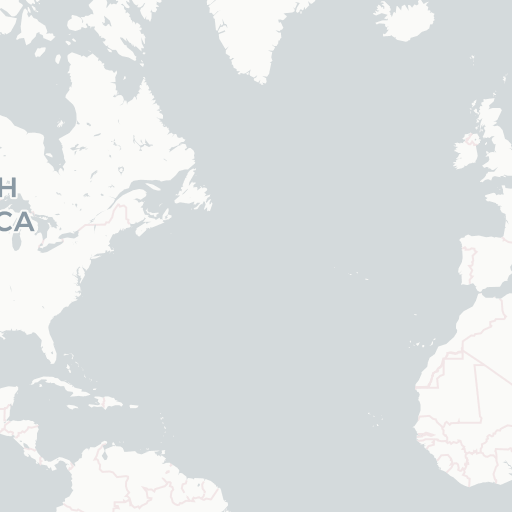
On 9 August 2026, the Royal Yacht Squadron line at Cowes will see a diverse fleet set off on one of the most treacherous courses in the offshore calendar. A complete circumnavigation of Great Britain and Ireland, anti-clockwise, non-stop: 1,805 nautical miles of vicious currents, windswept headlands and confused seas. For its 50th edition, the RORC's Round Britain & Ireland Race intends to make a statement.
Half a century of offshore racing
The first edition dates back to 1976. Two divisions coexisted then: one with stopovers, one without. Electron II, entered by the Royal Naval Sailing Association, had won the non-stop division. Since then, the format has evolved in step with the professionalisation of ocean sailing.
1980 marked the switch to 100% non-stop — Chica Tica II skippered by Carlo di Mottola Balestra took line honours. In 1992, a temporary return to stopovers via Cork, Lerwick and Hartlepool; victory for Deerstalker under the command of Michael Taylor-Jones. The 2000 edition coincided with the RORC's 75th anniversary, with Incisor of Wight sweeping the overall standings.
Then came 2014, the record-breaking edition. The MOD70 Musandam-Oman Sail, helmed by Sidney Gavignet, completed the course in 3 days, 3 hours, 32 minutes and 36 seconds. A time that still stands. Twelve years later, the 2026 fleet will attempt to smash it to pieces.
The course: from Land's End to Muckle Flugga
Comparing this race to a transatlantic in terms of distance would be misleading. The difficulty doesn't lie in the miles — it lies in what each mile demands.
The circuit requires leaving all land to starboard. After the start from Cowes, head west:
- Land's End — gateway to the Celtic Sea, first encounter with the currents
- West coast of Ireland — exposed head-on to Atlantic depressions, often chaotic seas
- St Kilda — ghost archipelago off the Outer Hebrides, compulsory waypoint
- Muckle Flugga — northern tip of the Shetlands, 60°N, where cold bites and wind howls
- North Sea descent — slalom between oil rigs, wind farms and sandbanks
- Return to Cowes via the Channel
What makes this course so formidable
The currents around Portland, Land's End and especially the Pentland Firth can stop a boat dead or propel it at mind-bending speeds. The race crosses several climate zones in a matter of days: Channel calms, North Atlantic depressions, Scottish katabatic winds. Direction changes at headlands force constant manoeuvres, exhausting sail changes, vigilance night and day. No downtime. Ever.
Four classes, one ocean
The 2026 edition remains true to the RORC's inclusive philosophy. Informed amateurs and seasoned professionals will share the same waters.
- IRC — monohulls under IRC rating, including doublehanded (IRC Two-Handed). The battle for the overall trophy on corrected time is fought here.
- Class40 — 40-foot Box Rule boats, often the largest and most hotly contested fleet in real time.
- IMOCA — 60-foot Open boats, some with foils. Technological showcase, hunting ground for monohull records.
- MOCRA Multihulls — the absolute record machines.
Entries have been open since 3 November 2025 via the SailRaceHQ portal. Each team must demonstrate their ability to face Category "O" conditions — offshore, total self-sufficiency.
Find the complete calendar for this edition on spencer.club.
The contenders
Six months from the start, the entry list continues to grow. It's among the Class40s that the buzz is most visible.
Class40: depth and ambition
Several projects are already identified:
- Sogestran - Seafrigo — the duo of Guillaume Pirouelle / Cédric Chateau, familiar podium finishers, are gunning for the win
- Legallais — skippered by Fabien Delahaye, a serious contender for class victory
- Alternative Sailing - Construction du Belon — Guillaume L'Hostis's project
The record chase
Gavignet's 2014 time — 3 days and 3 hours on a MOD70 — remains the mark to beat. On the monohull front, the potential arrival of new foiling IMOCAs, faster than ever, could reshuffle the cards on existing reference times.

The stakes of the 50th anniversary
Real-time tracking
The RORC is deploying enhanced tracking for the occasion. A detailed live tracker will allow the public to dissect each skipper's tactical options in real time. The hashtags #RBIR2026 and #RORCRacing will centralise content from the teams — raw images, manoeuvre videos, life on board in the chaos.
A race that shows no mercy
Many crews consider the Round Britain & Ireland as the pinnacle of a four-year cycle. Technical preparation tolerates no shortcuts. Unlike the trade winds of a transatlantic that can offer respite, here each section of the course brings its own specific set of problems: contrary currents, unstable winds, heavy shipping traffic in the North Sea.
Cowes, yachting capital
The start and finish village generates significant activity for the Isle of Wight — spectators, crew families, technical logistics. For an anniversary year, the turnout should match the scale of the event.
9 August, at Cowes
Completing this loop of 1,805 miles will be an achievement in itself. The North Sea and the Atlantic care nothing for anniversaries — they remain the most unforgiving arbiters on the offshore circuit. To follow the entries and compare the boats at the start, head to spencer.club.
Don't miss any major race
Receive upcoming offshore sailing milestones directly by email.
Projects available in the classes of this race
Selection based on the race class(es). Actual participation depends on official entries.
- Spencer
- Spencer
- Spencer
Would you like to contribute?
Propose an event, a podcast or an article related to offshore sailing.
Is any information missing or incorrect? Let us know.
Propose a contributionDon't miss any major race
Receive upcoming offshore sailing milestones directly by email.