Dates
May 2, 2026
Route
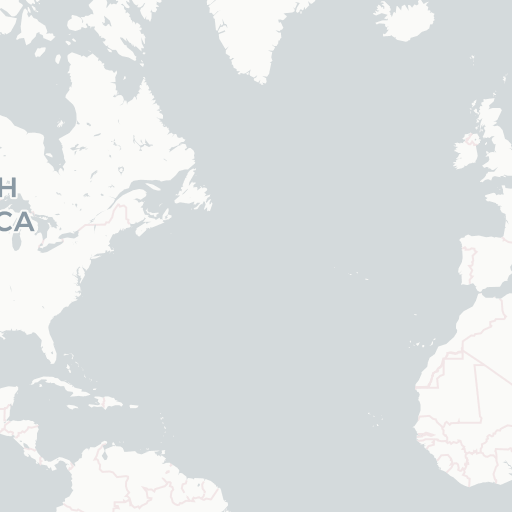
Cowes → Le Havre
View table of contents
A cannon blast at the RYS and bound for Le Havre: the English Channel as playground
May 2, 2026, at the Royal Yacht Squadron line, Cowes. When the first warning signal sounds at 11:50am, the RORC's European offshore season will officially be underway. The Cervantes Trophy Race, opening round of the Cowes Offshore Racing Series, sends the fleet across the Channel to Le Havre — between 110 and 160 nautical miles depending on the course set by the committee. A baptism of fire for crews who often haven't seen a night at sea since last autumn.
A trophy forged in Admiral's Cup history
The Cervantes name carries weight. The solid silver trophy was presented to the RORC in 1972 by Bob Watson, owner of a lineage of yachts designed by Sparkman & Stephens. His Cervantes IV was part of the victorious British team in the 1971 Admiral's Cup, alongside Prime Minister Edward Heath's Morning Cloud and Arthur Slater's Prospect of Whitby.
Remarkable detail: 1971 was also the first year a woman joined the British Admiral's Cup team. Liz Watson, Bob's daughter, sailed regularly aboard Cervantes. A pioneer in a world that was then almost exclusively male.
Since then, the race has established itself as the barometer of the Season's Points Championship, the world's largest offshore racing series. The finish is historically judged by the Société des Régates du Havre, France's oldest yacht club, founded in 1838 — a cross-Channel sporting and diplomatic bridge that has never been broken.
The course: from the Solent to the Seine Bay currents
The start from the RYS line launches crews into a technical exit from the Solent, threading between Victorian forts (No Man's Land Fort) and sandbanks. Then comes the crossing itself: powerful currents, cargo ship traffic, and notoriously fickle early-May weather.
The archives speak for themselves:
- 2019: northerly gusts exceeding 30 knots, leaders completing the course in under 15 hours
- 2024: 14 knots at the start, wind collapses south of the Isle of Wight, fleet compression — small ratings come back into play
The approach to Le Havre adds another layer of complexity with Seine Bay tides. Target time hovers around 24 hours, but the Channel alone decides the actual pace.
For 2026, high water at Portsmouth is forecast for 12:48pm (4.4m), offering a favourable current for the western Solent exit. A parameter every tactician will tick off upon reading the bulletin.
Five classes, one trophy
The fleet mixes IRC-rated monohulls and MOCRA-rule multihulls, divided into classes:
- IRC Zero & One — prototypes and large formats: Ker 46, TP52
- IRC Two & Three — the fleet's beating heart: Sun Fast 3600, JPK 1030
- IRC Four — more compact or older boats: Contessa 32, JPK 9.60
- IRC Two-Handed — the exploding category, regularly over 30 doublehanded crews
Overall standings are determined by IRC corrected time: a small boat sailed well can pip the maxis on the wire. That's all the magic — and frustration — of the system.
Regulatory updates
The 2026 rules emphasize communication and tracking equipment: mandatory AIS, compliance with World Sailing's Offshore Special Regulations. In shipping lanes, this isn't luxury.
The forces at play
Title holders and course benchmarks
- Pintia (J/133), skippered by Gilles Fournier and Corinne Migraine — three-time winner, racing from their home port of Le Havre. The absolute benchmark on this course.
- Black Sheep (Sun Fast 3600) by Trevor Middleton — overall winner in 2024 thanks to surgical precision in medium winds.
- Redshift (FAST40+) by Ed Fishwick — dominated the windy 2019 edition.
The doublehanded battle
The Two-Handed category has become the theatre of the fiercest rivalries. Tim Goodhew & Kelvin Matthews on the Sun Fast 3200 Cora, Rob Craigie & Deb Fish on the Sun Fast 3600 Bellino — pairs accustomed to podium finishes. The arrival of recent designs like the Sun Fast 3300 (notably Ian Hoddle's Game On) sharpens the technical competition further.
The line honours chase
For elapsed-time victory, eyes turn to the Baraka GP (Ker 43) of the De Graaf family, or high-performance Class40s like The 3 Bros by Renaud and Gilles Courbon.
Find the entered boats and compare their characteristics on spencer.club.

What's at stake on May 2
First crash-test of the season
The Cervantes doesn't forgive lack of preparation. First night at sea of the year, under racing conditions: rigging, electronics, autopilot — everything gets tested. What breaks here won't break during the Myth of Malham or Round Ireland Race this summer. Teams know it: this race is as much a technical audit as a regatta.
Championship strategy
No bonus coefficient like the RORC Transatlantic, but early-season points are precious. A poor opening result means chasing the score for months.
Le Havre: finish port and celebration venue
The Norman welcome is part of the race's DNA. Prize-giving by the SRH, often the day after arrival, maintains a cross-Channel bond that post-Brexit hasn't dented. For Le Havre, the event generates significant port and tourist activity.
Key figures for the 2026 edition
| Indicator | Detail |
|---|---|
| Distance | 110 – 160 nm (depending on course selected) |
| Start | RYS Cowes, western Solent exit |
| Date | Saturday, May 2, 2026, signal at 11:50am BST |
| Trophy | Cervantes Trophy (IRC corrected time) |
| Time reference | ~14-15 h for fast monohulls |
Follow updates on this race and the complete season calendar on spencer.club.
Don't miss any major race
Receive upcoming offshore sailing milestones directly by email.
Projects available in the classes of this race
Selection based on the race class(es). Actual participation depends on official entries.
- Spencer
- Spencer
- Spencer
Would you like to contribute?
Propose an event, a podcast or an article related to offshore sailing.
Is any information missing or incorrect? Let us know.
Propose a contributionDon't miss any major race
Receive upcoming offshore sailing milestones directly by email.